
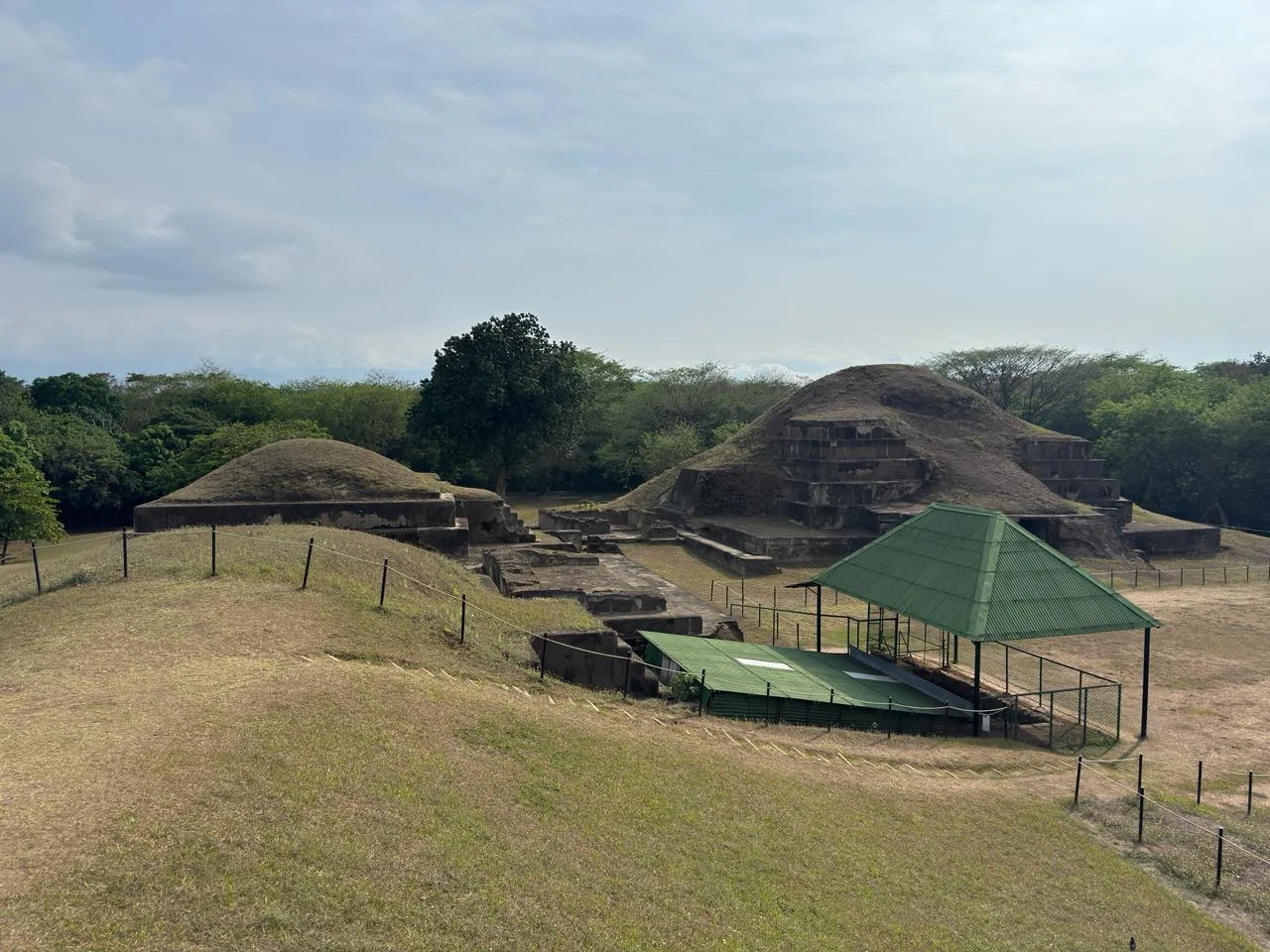
San Andrés
Ancient regional capital with an acropolis, large plazas, and pyramids in the Zapotitán Valley.
Km. 35 of the Pan-American Highway, Ciudad Arce, La Libertad
About San Andrés
San Andrés preserves the monumental center of a pre-Hispanic city that once extended over more than 200 hectares. During your visit, you can explore its acropolis, a large plaza surrounded by structures, and La Campana, the largest building in the complex. The park's museum showcases the main findings and explains how the government, ceremonies, and daily life of the population that inhabited the Zapotitán Valley were organized.
Details
Hours
Mon closed Tue-Sun 9:00 AM-4:00 PM
Admission
$1 – $5 USD
Best time to visit
In the morning
Highlight
5 km from Joya de Cerén
Brief History
The occupation of San Andrés began around 900 B.C. as an agricultural settlement in the Zapotitán Valley. After the great eruption of the Ilopango volcano, the population returned and rebuilt the site. Between 600 and 900 A.D., it reached its peak as a regional capital and a political, religious, and economic center. From here, it exerted influence over other communities in the valley until it lost its significance at the end of the Classic period.
Location & Map
Km. 35 of the Pan-American Highway, Ciudad Arce, La Libertad
Visit Tips
Entrance: $1 for Salvadorans, $3 for Central Americans and resident foreigners, $5 for non-residents. Residents of the municipality, students with a valid ID, people with disabilities, seniors, and children under 12 enter for free.
Open from Tuesday to Sunday, from 9:00 a.m. to 4:00 p.m. Closed on Mondays.
The guided tour lasts from 35 to 45 minutes, in groups of up to 15 people. Combine it with Joya de Cerén: they are 5 km apart and can be done on the same day.
Want to visit San Andrés?
Tours, local guides, private transport and car rental. Tell us what you need and we'll arrange it for you.

TuChero · AI guide
Artificial Intelligence specialized in El Salvador
Want to discover more places?
Ask TuChero, your AI travel guide, for the best places, tips and recommendations for traveling around El Salvador.