
Joya de Cerén
The Mayan village that preserves homes, crops, and everyday objects from over 1,300 years ago.
Km. 35 on the road from San Salvador to San Juan Opico, La Libertad
About Joya de Cerén
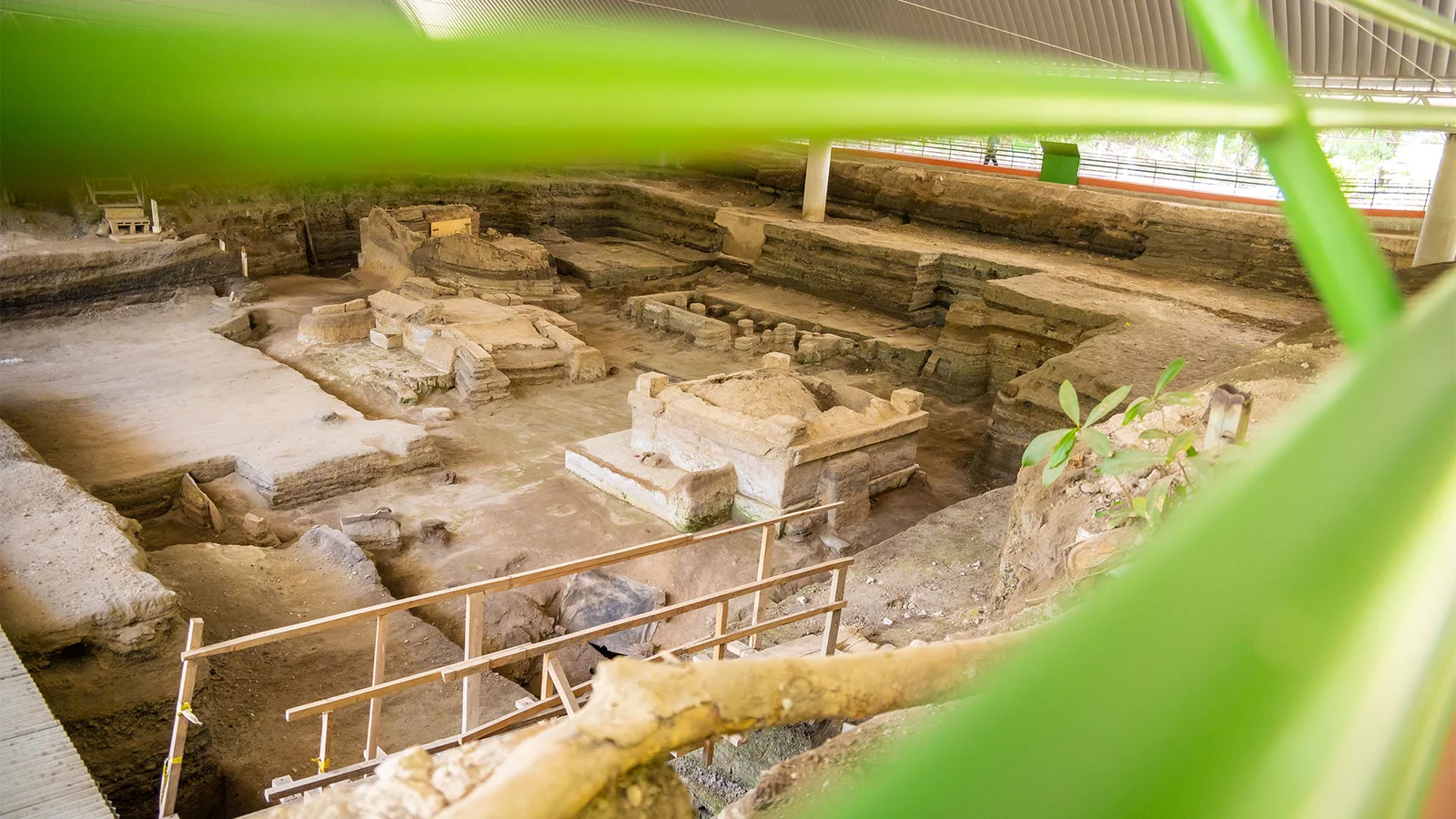
Joya de Cerén allows visitors to discover how daily life unfolded in a Maya agricultural community. The tour showcases homes, kitchens, storerooms, communal spaces, and a steam bath, along with utensils and cultivation areas preserved in their original location. Unlike the grand ceremonial centers, this site reveals how families prepared their meals, stored their harvests, and organized their daily activities.
Details
Hours
Mon closed Tue-Sun 9:00 AM-4:00 PM
Admission
$1 – $10 USD
Best time to visit
In the morning
Highlight
UNESCO World Heritage
Brief History
The community of Joya de Cerén was established after the Zapotitán Valley was repopulated following the great eruption of the Ilopango volcano. Around the year 650 A.D., a new eruption, this time from the Loma Caldera volcano, buried the village and preserved its buildings and belongings. The site was accidentally discovered in 1976 during the construction of silos for grain storage. In 1993, it was inscribed as a UNESCO World Heritage Site and remains the only Salvadoran site with this distinction.
Location & Map
Km. 35 on the road from San Salvador to San Juan Opico, La Libertad
Visit Tips
Entrance: $1 for Salvadorans, $3 for Central Americans, $7 for resident foreigners, and $10 for non-residents. It is the highest fee of the five parks because it is a World Heritage Site.
Open from Tuesday to Sunday, from 9:00 a.m. to 4:00 p.m. Closed on Mondays.
It has a café and free guide service. It is 5 km from San Andrés: both parks can be visited on the same day without rush.
Want to visit Joya de Cerén?
Tours, local guides, private transport and car rental. Tell us what you need and we'll arrange it for you.

TuChero · AI guide
Artificial Intelligence specialized in El Salvador
Want to discover more places?
Ask TuChero, your AI travel guide, for the best places, tips and recommendations for traveling around El Salvador.